Poured by hand in batches of forty · Bring any empty jar back for a refill
Our story
Poured by hand, forty jars at a time.
One small room, one stove and a shelf of curing jars. This is how a candle is made here, and how to look after it once it is yours.
Pour day
Every second Tuesday
We started with one scent, a borrowed saucepan and a kitchen that smelled of cedar for a month.
Emberly is poured by Wren Halloway in a single room at the back of an old dairy. There is one stove, two water baths, a long pine bench and a shelf that holds four hundred curing jars on a good week.
Nothing here is automated. Every scent is weighed by hand, every jar is poured from a jug and every wick is trimmed before the lid goes on. That keeps the batches small, forty jars per scent, and it means a scent can run out. We think that is fine.
What we care about is the burn: an even melt pool, a quiet flame, a scent you notice when you come back into the room rather than the moment you strike the match.
Studio shop
Unit 4, The Old Dairy
Open
Thursday to Saturday, 10 to 5
Pour day
Every second Tuesday
Five steps, fourteen days.
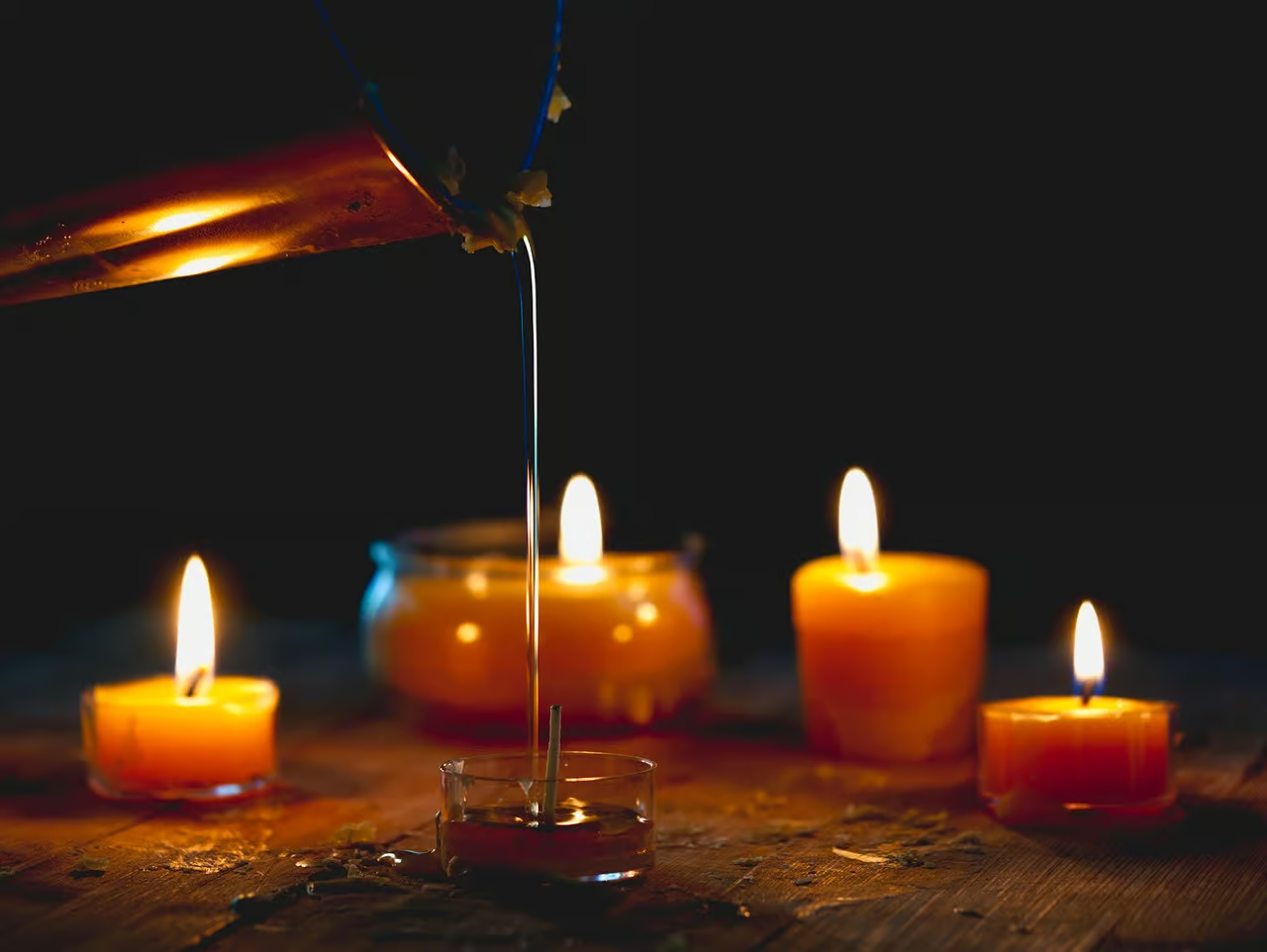
Pour day is every second Tuesday. Everything before the lid is done by hand, in the same order, for every one of the nine scents.
01
Melt
Soy flakes go into a water bath and melt slowly. The wax is never brought to a boil, which keeps it clear.
02
Blend
Each scent is weighed per jar and folded in by hand, then stirred for two full minutes so it binds.
03
Pour
Forty jars per scent, poured in two passes so the top sets flat, wicks held straight by wooden clips.
04
Trim
Clips come off, wicks are cut to five millimetres and any jar with a sunken top is set aside.
05
Cure
Jars rest uncovered on the shelf until the scent has settled. Then the cork lids go on and the batch is boxed.

A full melt pool
Soy, and nothing blended in.
We pour straight soy wax. It melts at a low temperature, so the pool spreads wide and slow and carries scent without needing a hot flame.
Wax
Soy, poured straight
Colour
Left natural, never dyed
Scent load
Measured by weight, per jar
Finish
Matte top, soft frosting at the glass
Frosting, the pale bloom where soy meets glass, is natural to the wax and does not change how a candle burns.
Cotton, sized to the jar.
A wick that is too thin tunnels and one that is too thick smokes. Each jar gets the wick that melts it edge to edge, and the Grand gets two.
Votive
One braided cotton wick
Classic
One braided cotton wick, heavier
Grand
Two braided cotton wicks
Tab
Set in the centre with a wooden clip
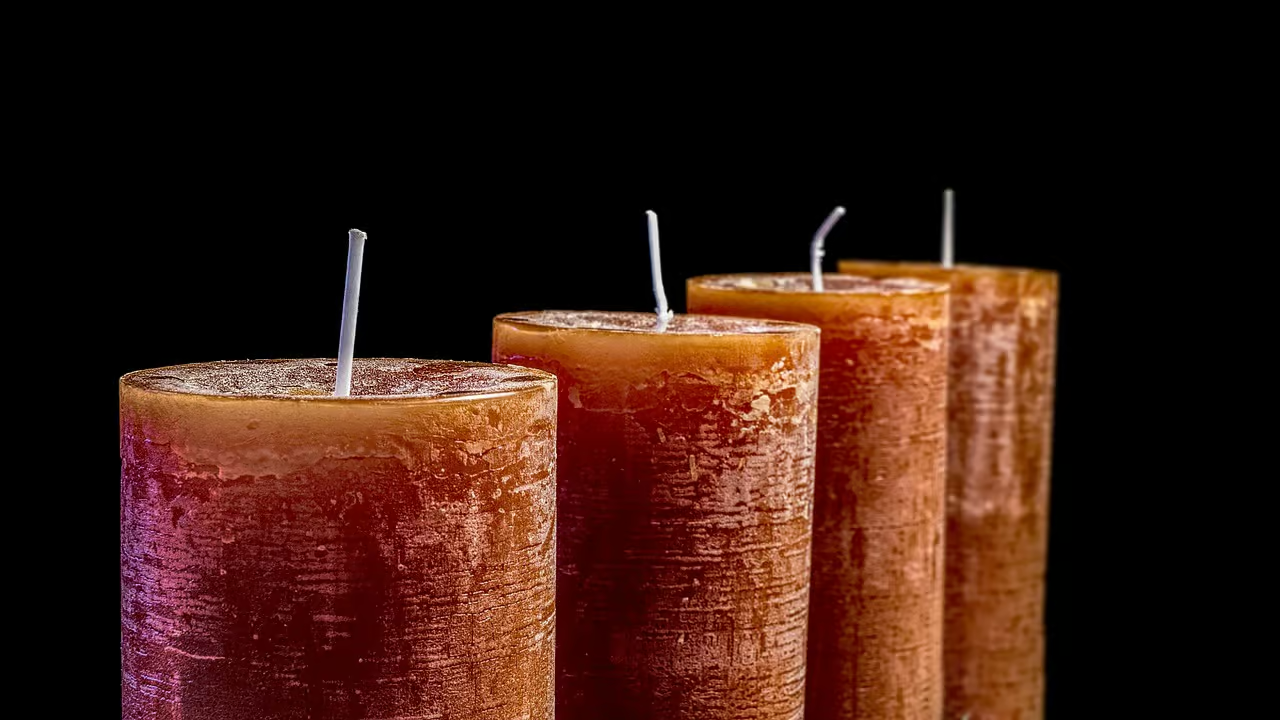
Trimmed to five millimetres
Look after the first burn, and the rest follow.
Six habits that keep a jar burning evenly to the bottom. The same card comes folded inside every box.
01
Let the first burn run long
Two to three hours, until the melt reaches the glass all the way round. A short first burn leaves a tunnel.
02
Trim before every light
Cut the wick to five millimetres each time. A long wick smokes, flickers and blackens the glass.
03
Four hours at most
After four hours the wick mushrooms and the jar runs hot. Put it out and give it two hours to rest.
04
Keep it out of draughts
A draught pulls the flame to one side and the jar melts unevenly. Away from open windows and fans.
05
Snuff, do not blow
Use a lid or a snuffer. Blowing scatters wax and leaves a trail of smoke through the room.
06
Stop at a centimetre
Leave the last centimetre of wax in the jar, then bring it back to us for a refill.
When something goes wrong
Tunnelling
The flame has sunk into a hole and wax clings to the glass. Wrap a ring of foil over the rim, leaving the centre open, and burn for an hour until the top melts level.
Black soot
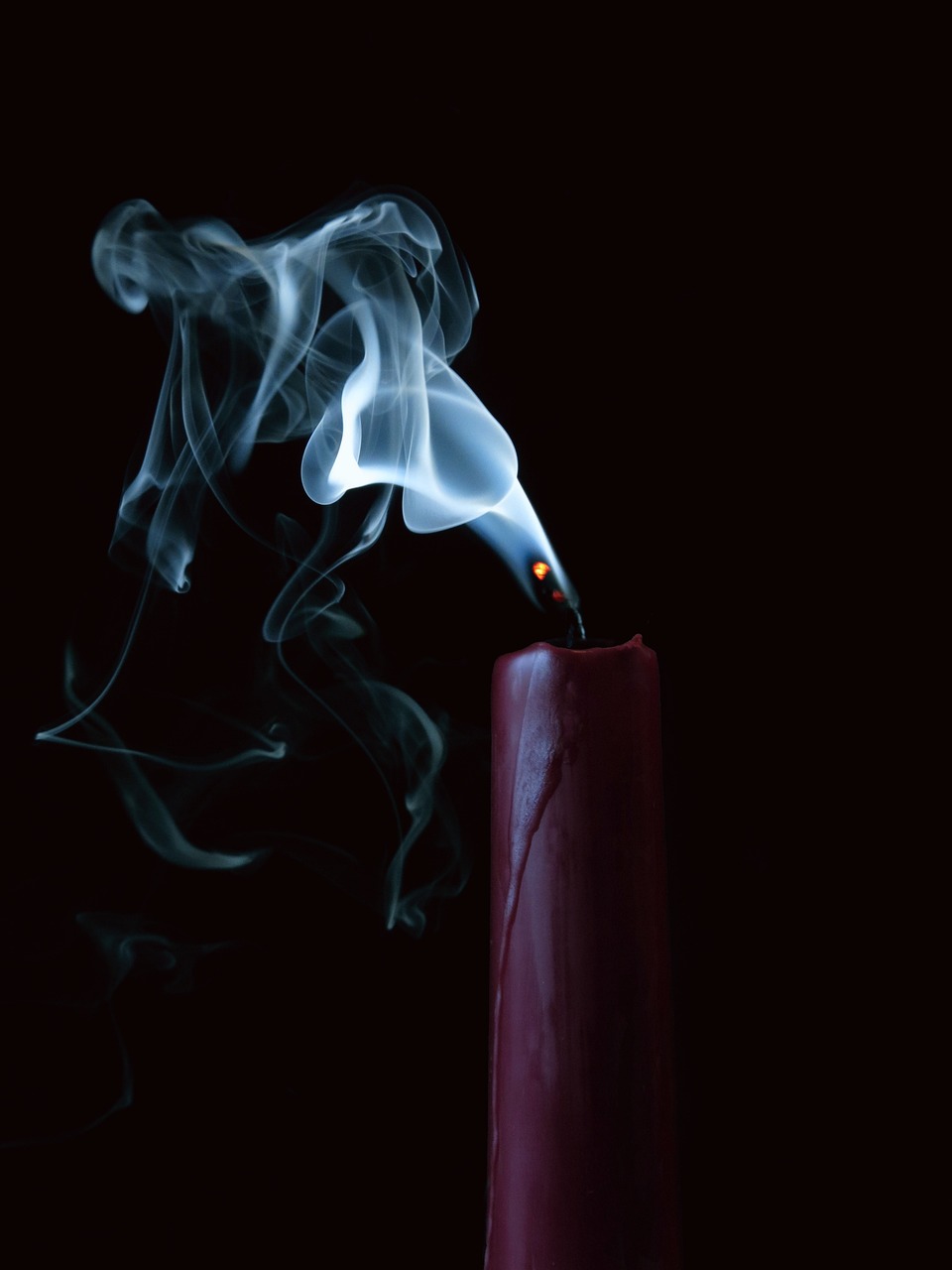
The wick is too long or the candle sits in a draught. Put it out, let it cool, trim to five millimetres and move it away from open windows.
A tall, flickering flame
Usually a mushroomed wick after a long burn. Snuff it rather than blowing, trim once it is cool, and keep burns under four hours.
Faint scent
Soy releases scent from the melt pool, not the flame. Give it forty minutes in a closed room before you judge it.

Refill day: first Saturday of the month
The jar is the expensive part. Keep it.
Every Emberly jar can be cleaned and poured again. You pay for the wax, the wick and the scent, not for new glass.
1
Burn to a centimetre
Stop when about a centimetre of wax is left. Burning lower heats the glass.
2
Bring or post the jar
Drop it at the studio shop, or post it with the lid on and a note of the scent you want next.
3
We clean and rewick
The old wax is melted out, the glass washed and a new cotton wick set in the centre.
4
Collect after the cure
Your jar is poured on the next pour day and ready fourteen days later.
Votive
$14
Classic
$26
Grand
$42
We refill our own jars only. A chipped or cracked jar is recycled and replaced at no extra cost.
Find the family that feels like home.
Nine candles, three jars, one wax. Start with a single scent or the discovery set.